Whispers in the Windward Pines: The Story of Kailua's Iconic Ironwood Trees
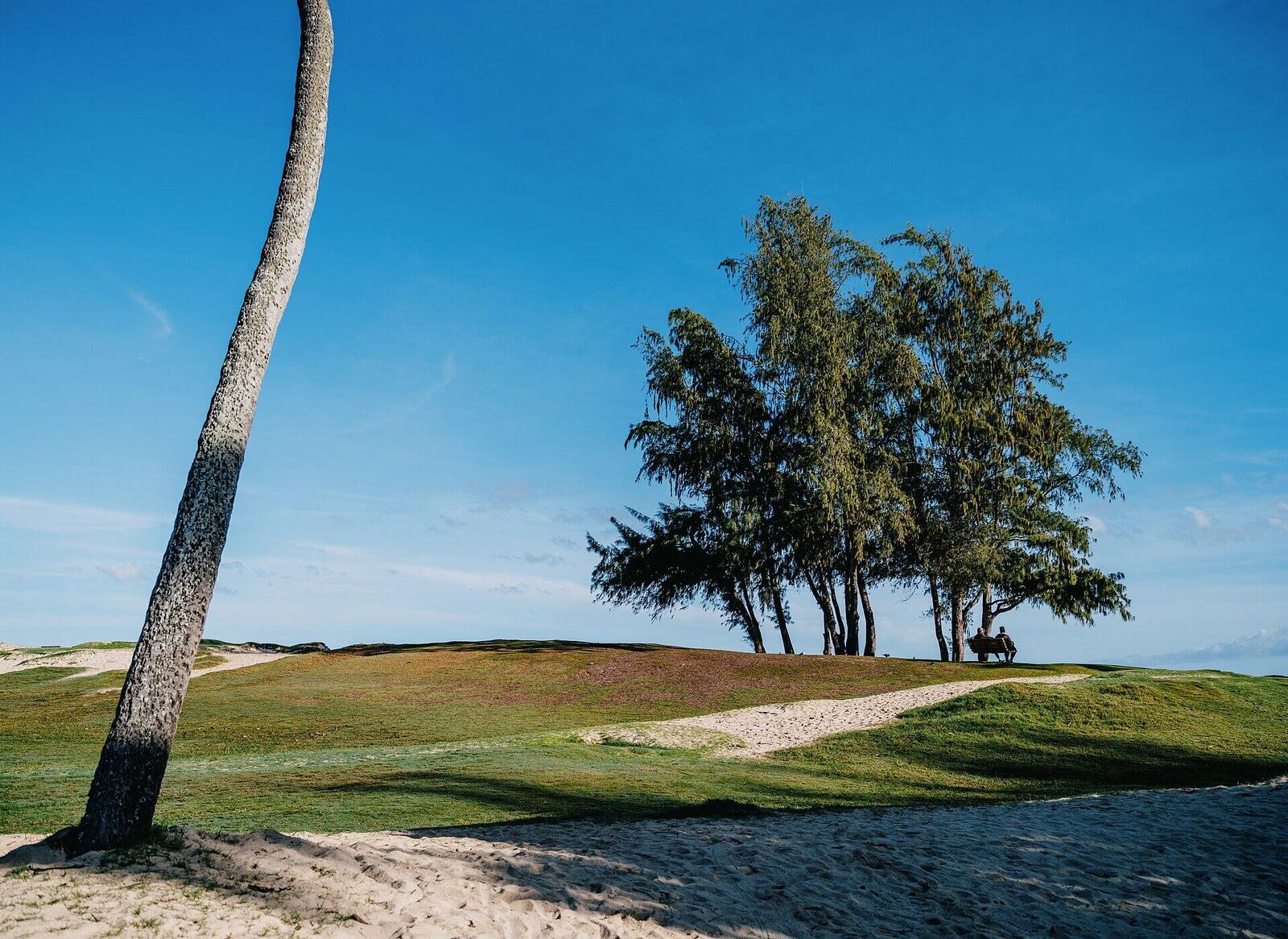
There is a sound that belongs to Kailua alone. It is not the crash of waves or the cry of the ʻiwa bird, but a softer, more persistent whisper that sifts through the air like a secret passed from leaf to leaf. It comes from the ironwood trees that stand sentinel along Kailua Beach Park, their feathery branches swaying in the trade winds, their needles singing a quiet, rhythmic song. To walk beneath them is to step into a cathedral of green and shadow, where the world slows to the pace of a sigh.
These trees are not native to Hawaiʻi. They are strangers who became family, immigrants who found a home in the volcanic soil and salt-laden air. Casuarina equisetifolia comes from Australia, parts of Southeast Asia and some islands of the western Pacific. Botanists believe it was first brought to Hawaiʻi in 1882, when trees were planted on Kauaʻi, and by 1890 an avenue of ironwoods had been planted in Waikīkī. Fast growing and tolerant of salt spray and poor, sandy soil, the ironwood was planted widely across the islands as a windbreak. Exactly when the first ironwoods took root along Kailua's shore is not well documented, but they have been part of the beach for generations.
The trees took to their new home with vigor. Along the beach park they form a shady line between the grass and the sand. They provide shade for picnickers, a playground for children, and a perch for the mynah birds that chatter in their branches. They became part of the community's daily life, a living landmark that generations have come to know and love.
Yet the ironwoods are not without controversy. In Hawaiʻi the ironwood is rated a high-risk invasive plant, and its fallen needles can build a thick mat that few other plants grow through, leaving little room for native coastal species. At Kailua the trees face a newer problem as well: shoreline erosion. Waves have been cutting away the sand beneath them, and in December 2025 the City removed about a dozen ironwoods along the shore near the Kalapawai roundabout after two had fallen onto the beach and others showed signs of being undermined. The City, the State and community groups have been working together since late 2024 on ways to care for that eroding stretch of beach. The ironwoods are a reminder that nature is not static, that landscapes are shaped by both natural and human forces, and that sometimes the most beautiful things are those that arrive uninvited.
For me, the ironwoods are more than just trees. They are storytellers. When the trade winds blow, they speak in a language older than words, a language of rustling needles and creaking branches. It is a sound that invites reflection, that encourages you to sit on the grass and watch the clouds drift across the Koʻolau mountains. It is a sound that connects you to the past, to the generations of families who have picnicked in their shade, to the fishermen who have cast their lines from the shore, to the surfers who have paddled out to catch the waves. The ironwoods have witnessed it all, and they whisper their stories to anyone who cares to listen.
As the sun begins to sink behind the Koʻolau, casting long shadows across the sand, I find myself drawn to the grove once more. The wind picks up, and the trees respond, their needles shimmering like silver in the fading light. I close my eyes and let the sound wash over me. It is a sound of peace, of belonging, of home. In a world that is constantly changing, the ironwoods stand as a testament to resilience and adaptation. They remind us that even the most unlikely of arrivals can become part of a place, that roots can grow deep in unfamiliar soil, and that the whispers of the wind can carry the weight of history.
So, the next time you find yourself in Kailua, take a moment to walk among the ironwoods. Listen to their song. Let the wind carry your thoughts away. And remember that every tree has a story, and every story deserves to be told.